🧠
40nm Premium RSX Swap / Replacement
Our preferred Frankenstein RSX: factory bare-die 40nm silicon from select Super Slim MSX/MPX donors with a completely renewed die-level thermal interface.
View service details → iKon Technical SolutionsPS3 Hardware Restoration
PS3 Frankenstein Repair Service
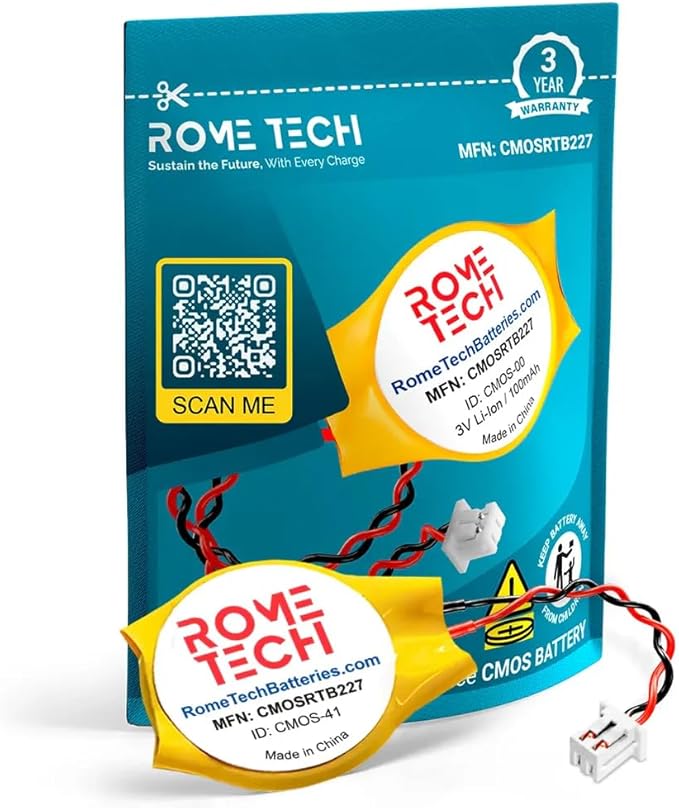
Optional PS3 CMOS/RTC battery replacement for FAT PlayStation 3 restoration. Existing battery tested free, with replacement recommended below approximately 3.0V using a fresh cell measuring around 3.2-3.3V.
This is physical electronics repair only. This service does not include custom firmware, jailbreaks, modchips, copied games, downloaded games, piracy tools, firmware or system software modification, copyright bypassing, or instructions for accessing paid content.
Service Overview
The PlayStation 3 contains a small 3-volt lithium RTC backup battery that allows the system's real-time clock to continue operating while the console is disconnected from AC power.
On an early FAT PlayStation 3, the original battery may now be approaching twenty years old. Some of them still test surprisingly well. Others have already lost a significant portion of their original voltage and are approaching the point where date and time retention can become unreliable.
This is a completely optional maintenance item.
It does not repair YLOD, GLOD, RSX failure, CELL failure or any other major motherboard problem. We replace it because it is an inexpensive age-related component that is extremely easy to address while the console is already completely disassembled.
We do not automatically sell every customer a new RTC battery.
During the restoration, we can measure the existing battery at no additional charge and make the decision based on its actual condition.
A new replacement lithium cell typically measures approximately 3.2-3.3V when fresh. Although these batteries are nominally rated at 3V, their unloaded voltage when new is normally somewhat higher than the nominal rating.
Our general rule is simple:
We are not waiting for the battery to reach zero volts before calling it old.
If a nearly twenty-year-old cell has already fallen below approximately 3.0V and a fresh replacement is sitting around 3.2-3.3V, we would rather install the new battery now while access is easy.
A lithium RTC cell discharges very slowly over its service life. That slow discharge is exactly why many original PS3 batteries are still operating after so many years.
But once we are already rebuilding a console intended for another long period of service, our question is not simply:
"Does the old battery still work today?"
The better question is:
"Does it make sense to reinstall this aging battery when a fresh replacement costs only $17.50 and the entire motherboard is already accessible?"
If the original cell still measures above approximately 3.0V and is functioning correctly, keeping it is reasonable.
If it has already fallen below that point, we would rather install a fresh cell now and give the restored console the greatest practical chance of going many more years without needing to be opened simply for an RTC battery.
A major Frankenstein restoration is intended to keep the console in service for the long term.
The motherboard is already out. The shielding is already removed. The system is already receiving processor, electrical and thermal restoration work.
This is therefore the easiest and least disruptive opportunity the console will probably ever have for a new RTC battery.
If we install a fresh 3.2-3.3V lithium cell now, the goal is that nobody has to open the console again for this battery for a very long time.
Given how long many of Sony's original batteries have lasted, replacing a weakened original during a complete restoration is inexpensive preventative maintenance.
The battery's primary job is maintaining clock-related information while the PlayStation 3 is completely disconnected from external power.
When the battery becomes sufficiently weak or depleted, the system can lose its stored date and time after being unplugged.
The result is normally inconvenience rather than catastrophic hardware failure.
You may simply have to set the date and time again after the system has been without AC power.
If you do not care about resetting the clock after a complete power loss, this upgrade is absolutely not required.
The RTC battery should not be confused with any of the high-current electrical systems involved in a Frankenstein restoration.
It does not:
Replacing the RTC battery is maintenance, not a motherboard reliability modification.
Some components in our Frankenstein package are mandatory because they are directly involved in the electrical environment supporting the replacement processor.
The NEC/TOKIN power-rail rebuild, required RSX voltage configuration and appropriate resistor modifications fall into that category.
The RTC battery does not.
This one really is optional.
We test it, tell you what it measures, and make a recommendation.
There is no reason for us to pretend a healthy battery needs replacement simply to increase the invoice.
Many backwards-compatible FAT PlayStation 3 systems date from the 2006-2008 production era.
That means we routinely encounter original RTC batteries that have spent close to two decades installed in the same motherboard.
The fact that some of these cells can still measure above 3V after that amount of time is a testament to how little current the RTC circuit requires and how well lithium primary cells can survive in this type of application.
But nothing lasts forever.
If an original battery has already dropped significantly from the roughly 3.2-3.3V we expect from a fresh replacement, the complete restoration is an excellent opportunity to reset that maintenance clock.
Because old does not automatically mean bad.
If the original battery measures well and the console retains its date and time normally, there is no technical emergency requiring replacement.
We would rather show the customer the measurement and let the condition of the part determine the recommendation.
For example:
The decision is not complicated.
The $17.50 service includes the new replacement battery, installation and verification while the console is already open.
The component itself is obviously nowhere near the complexity of an RSX conversion or power-rail rebuild. The value is primarily in taking care of it while complete access to the motherboard already exists.
Opening a completely restored backwards-compatible PlayStation 3 several years from now just to change a small RTC battery makes far less sense than replacing a weak one while the motherboard is sitting on our bench today.
There is no pressure from us to replace a healthy battery.
Let us put a meter on it first. Testing is free.
If the original battery is still above approximately 3.0V and functioning normally, there is nothing wrong with leaving it installed.
If it is below approximately 3.0V, our recommendation is simple: spend the $17.50, install a fresh cell measuring roughly 3.2-3.3V, and take care of it while the console is already completely apart.
The original battery has already proven that this type of cell can last an extremely long time in a PS3.
The whole idea is to install the new one now and hopefully not have any reason to open the console again for another decade or two.
And if you do not care about resetting the date and time someday after a complete power loss?
Skip it. Unlike several parts of our Frankenstein package, this one really is your choice.
Premium Packages Customized to your budget.
Related Service Options
Most premium restorations combine multiple hardware services depending
on the condition of the console.